
If you work in logistics, food distribution, FMCG, or cold chain transport in the United Arab Emirates, you have likely heard the terms reefer truck, freezer truck, chiller truck, refrigerated truck, and fridge truck used interchangeably.
While these terms frequently overlap, they can mean entirely different things depending on who you are talking to. In a harsh climate where summer temperatures easily scale past 45°C, confusing these terms isn’t just a minor misunderstanding—it is a logistical error that can cause complete cargo spoilage, regulatory penalties, and significant financial losses.
This comprehensive guide defines exactly what a reefer truck is, how it functions, how it differs fundamentally from smaller chiller or freezer vans, and how to choose the right vehicle for your cross-emirate transport operations.
Quick Answer: A reefer truck is a large, heavy-duty refrigerated truck equipped with a standalone (independent) refrigeration unit that operates on its own dedicated fuel source or electric motor, completely independent of the vehicle’s primary engine. The term “reefer” is simply an industry shorthand for “refrigerated.”
In the UAE market, these powerful units typically maintain strict internal environments ranging from -25°C to +10°C and handle heavy payloads from 5 to 15 tonnes.
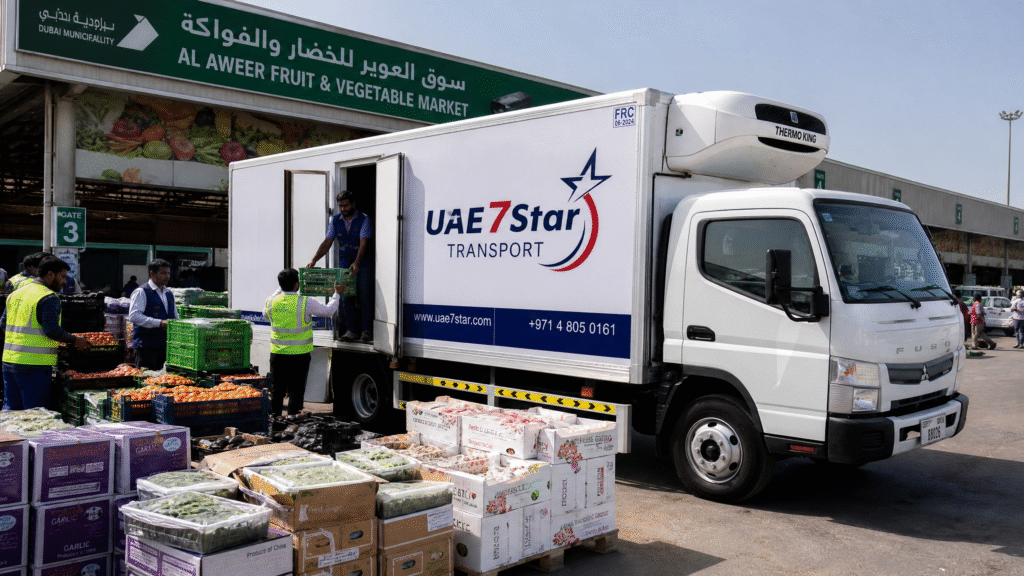
Where Does the Name “Reefer” Come From?
The term “reefer” is a decades-old maritime and freight industry abbreviation for refrigerated. It originated in North American shipping sectors to quickly distinguish temperature-controlled cargo holds from dry freight, and it has since become the global standard across international shipping and overland logistics lines.
In the UAE commercial transport market, “reefer” is used interchangeably with “refrigerated” in high-volume shipping and cross-border freight contexts:
- A reefer truck refers to a heavy-duty refrigerated truck.
- A reefer container refers to an intermodal, temperature-controlled shipping container used at major ports like Jebel Ali or Khalifa Port.
The word does not refer to a specific brand, proprietary design, or a single temperature setting. It is simply professional shorthand for high-capacity, heavy-duty refrigeration on wheels.
What Makes a Reefer Truck Different from Other Refrigerated Vehicles?
The defining technical feature of a true reefer truck is its standalone refrigeration unit.
Smaller transport vehicles like city delivery vans rely on direct-drive systems, where the refrigeration compressor is linked via a belt to the vehicle’s main engine. If the driver turns off the ignition to park, take a break, or wait out a traffic delay, the cooling power drops or shuts off entirely unless an auxiliary electrical plug-in is active.
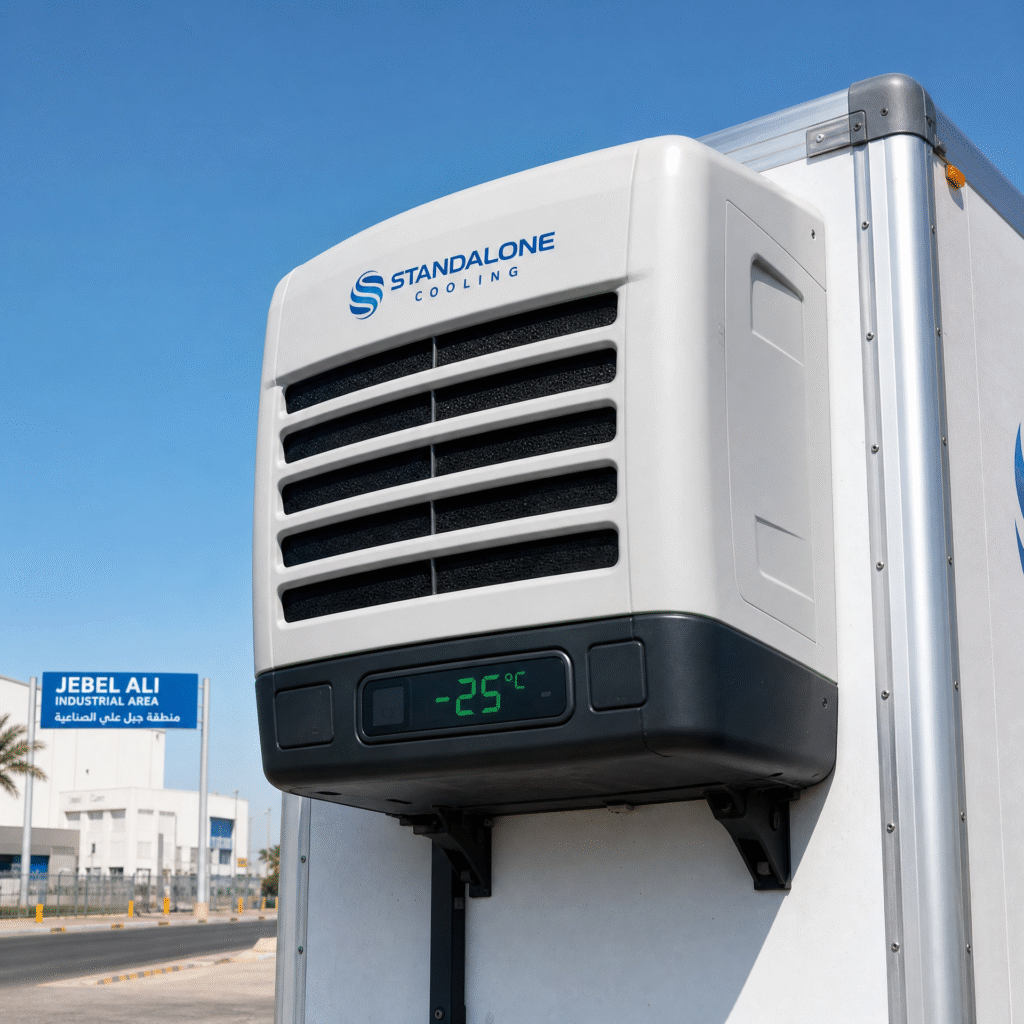
A reefer truck bypasses this limitation. It carries its own diesel engine or independent electric motor mounted directly to the front of the cargo box (often manufactured by industry leaders like Thermo King or Carrier Transicold).
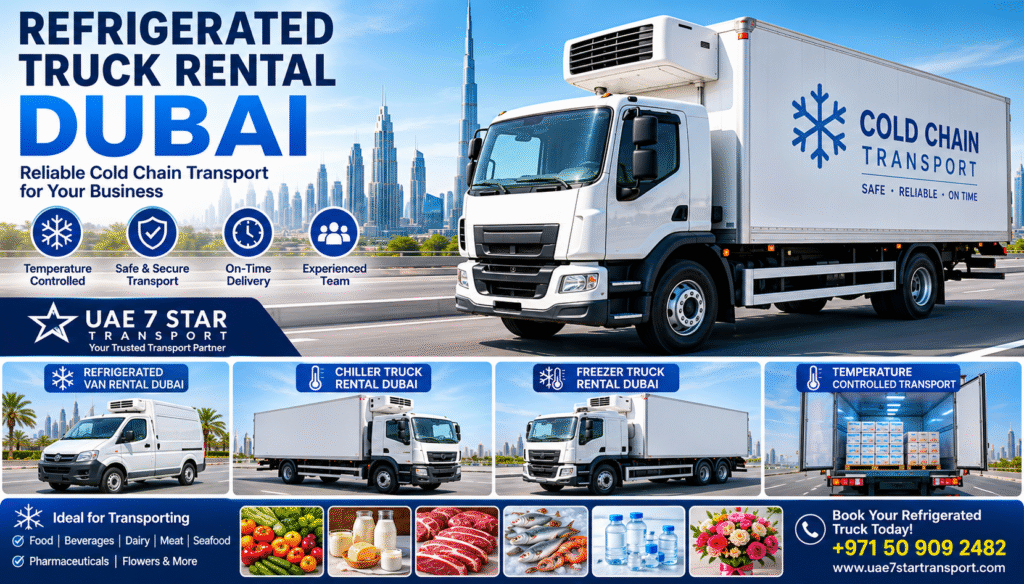
The table below breaks down how different temperature-controlled vehicles operate in the UAE rental market:
| Vehicle Type | Refrigeration System Type | Primary Power Source | Standard Temperature Range | Average Payload Capacity | Engine-Off Active Cooling? |
| Chiller Van | Direct-Drive (Engine-Driven) | Main Vehicle Engine | 0°C to +8°C | 1 to 1.5 Tonnes | No (Stops cooling when engine turns off) |
| Freezer Van | Direct-Drive (Engine-Driven) | Main Vehicle Engine | -18°C to -25°C | 0.9 to 1.2 Tonnes | No (Stops cooling when engine turns off) |
| Chiller Truck | Direct-Drive or Standalone | Vehicle Engine / Own Motor | 0°C to +8°C | 3 to 7 Tonnes | Only if configured with a standalone unit |
| Freezer Truck | Direct-Drive or Standalone | Vehicle Engine / Own Motor | -18°C to -25°C | 3 to 10 Tonnes | Only if configured with a standalone unit |
| Reefer Truck | Always Standalone | Dedicated Diesel / Electric | -25°C to +10°C | 5 to 15 Tonnes | Yes (Runs completely independently) |
The practical takeaway for supply chain managers is clear: if your logistics chain requires cargo to sit safely at a warehouse loading dock for hours, clear customs checkpoints at border crossings, or act as mobile cold storage overnight, a standalone reefer truck is mandatory.
Is a Reefer a Freezer or a Refrigerator?
This is one of the most common points of confusion for businesses looking to hire cold chain transport. The short answers clear up how these systems operate under strict regulatory standards like HACCP (Hazard Analysis Critical Control Point) and local UAE municipal frameworks.
Is a Reefer a Freezer?
Not exactly. A reefer truck is a highly adjustable, multi-climate vehicle. Because its standalone unit is extraordinarily powerful, it can act as a heavy-duty freezer by pulling internal temperatures down to -25°C for frozen meats, seafood, and ice cream.
What Is a Reefer Van, and How Does It Differ From a Truck?
[Reefer Truck] ---> Heavy Duty (5–15 Tonnes) ---> Standalone Diesel Engine ---> Cross-Emirate Bulk Freight
[Chiller Van]  ---> Light Duty (1–1.5 Tonnes) ---> Direct-Drive Line Engine ---> City Last-Mile Delivery
Key Differences at a Glance:
- Payload & Volume: Reefer trucks carry bulk quantities (up to 15 tonnes) of wholesale inventory. Vans top out around 1 to 1.5 tonnes, meant for small-batch delivery.
- Logistical Routing: Reefer trucks are built for primary distribution—moving massive shipments from sea ports and central manufacturing plants to regional distribution hubs. Vans handle the final mile, navigating tight residential streets, restaurant back-alleys, and shopping mall service lanes.
- Thermal Control: A reefer truck can shift from a deep freeze to a light chill on a single trip. a van is typically optimized for one specific range (either chilled or frozen) based on its insulation thickness and compressor specifications.
How Long Can a Reefer Truck Run Continuously?
A reefer truck equipped with a standalone diesel-powered refrigeration unit can run continuously for 10 to 14 hours on a single tank of fuel dedicated to the cooling unit.
It is important to note that standalone units utilize a separate fuel tank built directly into the refrigeration housing, entirely isolated from the truck’s primary driving fuel tank. If the unit is regularly refueled with diesel, it can run indefinitely—24 hours a day, 7 days a week.
The actual consumption rate and operational duration depend on four critical local variables:
- Ambient External Temperature: During the intense UAE summer months, the refrigeration unit must run at high RPMs continuously to counteract intense external thermal energy, which drains fuel faster than during milder winter operations.
- Target Set Point: Maintaining a deep-freeze environment of -25°C requires significantly more mechanical work and fuel consumption than holding a stable pharmaceutical or pharmaceutical-adjacent profile at +5°C.
- Door Opening Frequency: Every time the rear cargo doors are opened at a delivery stop, cold air escapes and hot air rushes in. The reefer unit must execute a “pull-down” cycle to stabilize the environment again, consuming extra fuel.
- Electric Standby Capability: Many premium reefer units feature electric standby motors. When parked at a logistics facility or distribution park, the driver can plug the unit directly into a three-phase electrical wall outlet, allowing the unit to run indefinitely without burning a single drop of diesel fuel.
When to Rent a Reefer Truck in the UAE
Choosing the wrong class of refrigerated vehicle can cause immediate supply chain failures. You should specifically opt for a high-capacity reefer truck rental over a light van if your business meets any of the following operational benchmarks:
- Heavy Multi-Ton Payload Requirements: Your total cargo weight exceeds 3 to 5 tonnes per single operational run.
- Cross-Emirate and Long-Haul Transport: You are executing bulk intercity transfers, such as hauling inventory from Abu Dhabi industrial hubs to retail networks in Fujairah or Ras Al Khaimah.
- Extended Off-Engine Customs and Dock Waiting Times: Your logistics routes involve predictable delays, such as port container clearances, border checks, or long queues at central supermarket distribution warehouses.
- Variable Cargo Profiles: Your business shifts between diverse inventory types—handling deep-frozen seafood lines on Monday mornings and handling chilled organic produce or climate-sensitive floral arrangements on Tuesday afternoons.
- Mobile Cold Storage Needs: You require temporary, scalable cold storage on-site at major outdoor venues, exhibitions, corporate events, or remote construction sites where fixed cold rooms are unavailable.

Comprehensive Cold Chain Solutions Across the UAE
When handling temperature-sensitive assets, you need a transportation partner with verified operational credentials and an immaculate fleet. UAE7Star Transport provides premier, fully optimized reefer truck and chiller van rental services across all emirates, including Dubai, Abu Dhabi, Sharjah, and Ajman.
- HACCP Certified (Hazard Analysis Critical Control Point) for absolute food safety management.
- ADAFSA Approved (Abu Dhabi Agriculture and Food Safety Authority) for safe handling and transport of food supplies.
- MOCCAE & GCCA Compliant ensuring adherence to national environmental, agricultural, and global cold chain standards.
Whether your company requires a 1-tonne chiller van for rapid inner-city grocery logistics or a multi-ton heavy reefer truck with standalone Thermo King or Carrier Transicold temperature management systems, we offer highly flexible daily, weekly, and monthly commercial contracts tailored exactly to your budget.
Connect with Our Logistic Strategists:
- Corporate Website: www.uae7startransport.com
- Direct Phone / WhatsApp Support: +971 50 909 2482
- Official Logistics Email: uae7startransport@gmail.com
Frequently Asked Questions
What is the primary difference between a reefer truck and a standard chiller truck?
The primary difference lies in the independence of the cooling system. A standard chiller truck often uses a direct-drive system linked to the truck’s main engine, meaning cooling efficiency drops or ceases when the vehicle stops running. A true reefer truck always uses a standalone refrigeration unit with its own separate motor, ensuring uncompromised, continuous climate control even when parked with the truck engine turned completely off.
Can a reefer truck carry both frozen and chilled products simultaneously?
These specialized units use internal insulated bulkheads (movable walls) and separate evaporators to maintain completely isolated thermal zones—allowing you to safely haul deep-frozen items at -18°C in the front compartment and chilled items at +4°C in the rear compartment on the exact same trip.
Commercial vehicles transporting food, beverages, or medical supplies across the UAE must hold strict municipal and federal approvals. Key certifications include HACCP compliance for food safety, ADAFSA registration for operations in Abu Dhabi, and clear clearances from the Ministry of Climate Change and Environment (MOCCAE). Using unapproved vehicles can result in severe municipal fines and cargo confiscation at checkpoints.