If you’ve ever opened a delivery box of frozen chicken or imported salmon and noticed it had gone soft at the edges, you already understand why frozen food transport in the UAE is not something to leave to chance. Between June and September, road surface temperatures here can hit 60°C, and a single 20-minute stop without proper insulation is enough to push a frozen product out of its safe range. For restaurant groups, supermarket chains, butcheries, and dairy distributors across Dubai, Abu Dhabi, Sharjah, and the Northern Emirates, that’s not a minor inconvenience — it’s a food safety violation, a wasted shipment, and potentially a fine from ADAFSA or the relevant municipality.
This guide walks through how frozen food transport actually works in the UAE, what the regulators expect, where most cold chain failures happen, and how to choose a transport partner that won’t put your stock — or your license — at risk. Whether you’re moving frozen meat, dairy, or even temperature-sensitive medicine, the same core principles apply, and we’ll cover the differences where they matter.
Why Frozen Food Transport in the UAE Carries Higher Stakes
The UAE’s climate is the single biggest variable most businesses underestimate
There’s also the regulatory layer. The UAE has built one of the more rigorous food safety frameworks in the region, partly because it imports such a large share of its food supply. That means frozen goods arriving at Jebel Ali Port or Abu Dhabi’s Khalifa Port often travel further within the country than people expect — sometimes across two or three emirates — before reaching a shelf or kitchen. Every leg of that journey is a point where temperature can drift, and every drift is a record that auditors can ask to see.
In practical terms, this means frozen food transport UAE operators need three things working together: the right equipment, the right paperwork, and drivers who actually understand what they’re hauling. Missing any one of the three is usually where things go wrong.
How Frozen Food Transport Actually Works, Step by Step
Most people picture a single “refrigerated truck,” but in practice, frozen logistics in the UAE runs on a few distinct vehicle types, each suited to different cargo.
Chiller trucks run warmer, typically 0°C to 5°C, and are the standard for fresh dairy, produce, and short-shelf-life items. Multi-temperature trucks use internal partitions so a single vehicle can carry frozen and chilled goods on the same route — useful for smaller supermarkets that order mixed pallets rather than full truckloads.
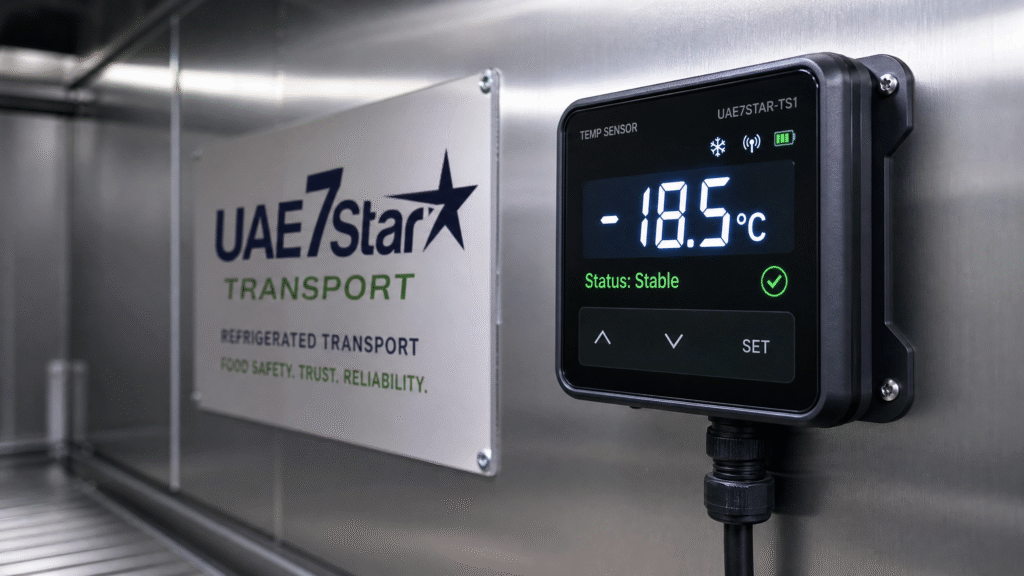
That continuous logging is what separates a compliant shipment from a risky one, because a temperature excursion in the middle of a four-hour route is invisible unless you’re actually recording it.
A trustworthy frozen food delivery chiller truck UAE provider won’t hesitate to share this.
UAE Regulations You Need to Know: HACCP, ADAFSA, and MOCCAE
This is the part most guides gloss over, and it’s the part that actually protects your business.
HACCP (Hazard Analysis and Critical Control Points) is the food safety methodology that identifies where contamination or temperature risk can occur in a supply chain and puts controls at each point. Any serious cold chain operator in the UAE should be able to show you HACCP-aligned procedures for loading, transit, and unloading — not just a certificate on a wall.
ADAFSA (Abu Dhabi Agriculture and Food Safety Authority) regulates food safety specifically within Abu Dhabi emirate, including transport of meat, dairy, and frozen goods into and within the emirate. If your business operates in Abu Dhabi or receives shipments routed through it, your transport provider needs to meet ADAFSA’s vehicle and hygiene standards, not just Dubai Municipality’s.
MOCCAE (Ministry of Climate Change and Environment) sets federal-level standards for food import, animal product handling, and in some cases livestock and meat transport across the country. This matters most for businesses importing frozen meat or dealing with cross-emirate shipments, where federal rules apply alongside local ones.
There’s also GCCA (Global Cold Chain Alliance) alignment, which isn’t a UAE government body but an international standard many serious cold chain operators voluntarily follow because it covers warehousing and transport best practices that go beyond minimum legal requirements.
Here’s the honest answer to a question we hear often: does every small transport job legally require all four? Not always — it depends on the product category, the emirate, and whether the shipment crosses borders
Choosing the Right Setup for Meat, Dairy, and Frozen Goods
Not all frozen cargo behaves the same way, and treating it as one category is a common, costly mistake.
Meat Transport UAE
Frozen and chilled meat is among the most regulated cargo categories because of disease control and halal handling requirements.
Dairy product transport UAE
Dairy product transport UAE needs precise temperature control, not just “cold,” and shorter transit windows than frozen meat can tolerate. If your dairy regularly arrives slightly soft or with condensation inside the packaging, that’s usually a sign of temperature cycling — the truck going warm and cold repeatedly — rather than a single failure point.
Frozen Goods Transportation UAE More Broadly
(Internal link opportunity: a dedicated guide comparing deep-frozen vs. chiller truck specifications could link here.)
What About Pharmaceutical and Medicine Cold Transport?
It’s worth addressing this directly, because pharmaceutical transport shares the same underlying logistics challenge as food but with even less margin for error.
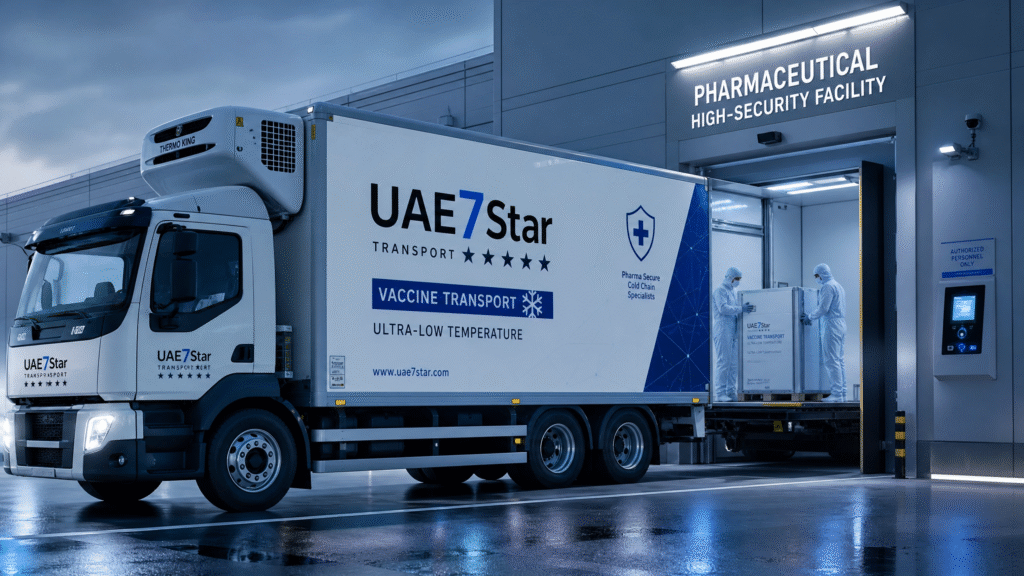
Pharmaceutical transport UAE typically requires tighter, narrower temperature bands — often 2°C to 8°C for standard cold-chain medicines — with continuous, auditable monitoring rather than spot checks. Medicine cold transport UAE generally follows Good Distribution Practice (GDP) guidelines, which overlap with HACCP principles but add stricter documentation and validation requirements specific to pharmaceuticals.
This is why vaccine logistics in the UAE typically uses validated cold boxes or qualified refrigerated vehicles with real-time alerting, not standard chiller trucks repurposed for the job.
If your current provider can’t produce this on request, that’s a red flag worth acting on before it becomes a compliance issue during an audit.
(Internal link opportunity: a dedicated pharmaceutical and medical cold chain service page could link from this section.)
Common Mistakes That Quietly Break the Cold Chain
After years around this industry, the failures tend to repeat themselves in predictable ways:
Underestimating door-open time. Every minute a truck door sits open at a loading dock in UAE summer heat lets warm air in. Efficient loading isn’t just about speed — it’s a temperature control measure.
Mixing incompatible cargo. Strong-smelling or high-ethylene produce stored near dairy or certain frozen goods can affect product quality even when temperature itself is fine.
No real-time monitoring. A printed temperature log filled in once at pickup and once at delivery tells you almost nothing about what happened in between. If something went wrong at hour two of a four-hour trip, you’ll never know until the product itself shows it.
Choosing price over compliance. The cheapest quote often comes from operators who’ve cut corners on vehicle maintenance, driver training, or certification. The savings rarely outweigh the cost of a rejected shipment or a regulatory fine.
How to Choose a Frozen Food Transport Partner in the UAE
A short, practical checklist before signing with any provider:
- Ask for proof of HACCP-aligned procedures, not just a logo on their website.
- Request a sample temperature log from a recent delivery, not just a sales pitch.
- Clarify whether they offer separate, dedicated vehicles for meat, dairy, frozen goods, or pharmaceutical loads, or whether everything shares the same fleet.
- Check their response plan if a vehicle breaks down mid-route — backup vehicle availability matters more in the UAE heat than almost anywhere else.
None of these questions should make a legitimate provider uncomfortable. If they hesitate or can’t answer specifics, that hesitation is itself useful information.
Frequently Asked Questions
What temperature should frozen food be transported at in the UAE? Deep-frozen products should generally stay between -18°C and -25°C throughout transit. Chilled items like fresh dairy and produce are typically kept between 0°C and 5°C. The exact requirement can vary slightly by product category and regulatory body, so it’s worth confirming the specific range for your goods with your supplier or transporter.
Is HACCP certification mandatory for food transport in the UAE? It depends on the business type and emirate, but HACCP-aligned practices are widely expected across the UAE food supply chain and are often required for businesses supplying hotels, supermarkets, or institutional clients. Even where it isn’t strictly mandatory for a specific transport job, working with a HACCP-aligned provider significantly reduces compliance risk.
How is pharmaceutical transport different from food transport in the UAE? Pharmaceutical transport generally requires tighter temperature tolerances, continuous monitoring with auditable records, and adherence to Good Distribution Practice guidelines. Vaccines in particular need validated equipment because narrow temperature excursions can render them ineffective, which is a higher stakes outcome than typical food spoilage.
Can one truck carry both frozen meat and dairy products together? Technically yes, with a properly partitioned multi-temperature vehicle and strict separation protocols, but many operators prefer dedicated vehicles for meat specifically due to hygiene and halal handling requirements. If cargo is mixed, ask how cross-contamination and temperature zoning are managed.
What happens if a frozen shipment arrives partially thawed? The product should generally be assessed against food safety guidelines before use or sale, and in many cases rejected if it shows signs of having exceeded safe temperature thresholds for an extended period. This is exactly why continuous temperature logging during transit matters — it gives you evidence either way, rather than guesswork.
Key Takeaways
Frozen food transport in the UAE isn’t just about having a refrigerated truck — it’s about matching the right equipment to the right cargo, understanding which regulatory body applies to your route, and working with a provider who treats temperature monitoring as a continuous process rather than a checkbox at pickup and delivery. The same discipline applies whether you’re moving frozen meat across Abu Dhabi, dairy within Dubai, or temperature-sensitive medicine that can’t tolerate any deviation at all.
If you’re currently relying on a transporter who can’t answer the questions in this guide with confidence, it may be worth requesting a sample temperature log from your next delivery and reviewing it honestly. That single document tends to reveal more about a provider’s reliability than any sales conversation. For businesses across the UAE looking for HACCP, ADAFSA, MOCCAE, and GCCA-aligned cold chain transport — whether for food or pharmaceutical cargo — reaching out for a direct conversation about your specific route and product type is the most reliable next step.