Maintaining a flawless temperature-controlled environment isn’t just a logistical goal; it is a regulatory mandate and a public health necessity. From the scorching summer heat of Abu Dhabi to the bustling distribution networks of Dubai and the Northern Emirates, the temperature outside can easily climb past 45°C. Under these extreme conditions, a single breakdown in your refrigeration chain can destroy an entire shipment of fresh food or life-saving medicine within minutes.
For businesses operating in the Middle East, understanding the mechanics of cold chain logistics in the UAE is critical. Whether you are moving delicate seafood, dairy products, or highly sensitive vaccines, your transport partner must do more than just provide a refrigerated vehicle. They must operate a fully compliant ecosystem backed by rigorous technical standards, international certifications, and local regulatory approvals.
This comprehensive guide breaks down everything you need to know about navigating temperature-controlled transport in the UAE, ensuring your assets remain fully protected from origin to destination.

1. What is Cold Chain Logistics and Why Does the UAE Require Extreme Precision?
At its core, cold chain logistics refers to the uninterrupted management of temperature-sensitive products through an unbroken series of storage and distribution activities. In the United Arab Emirates, this discipline faces a unique double threat: extreme ambient external temperatures and an exceptionally high reliance on imported goods.
Because the region imports a vast majority of its food supply and pharmaceutical assets, products spend considerable time in transit before ever reaching local shelves or medical facilities. This prolonged exposure makes the logistical “last mile” incredibly vulnerable.
To counter these environmental realities, federal and local government entities enforce stringent regulatory frameworks. Moving temperature-controlled cargo requires active compliance with several governing bodies:
- HACCP (Hazard Analysis Critical Control Point): An international risk-management framework that identifies, evaluates, and controls food safety hazards throughout the transportation lifecycle.
- ADAFSA (Abu Dhabi Agriculture and Food Safety Authority): The strict regulatory body governing food hygiene, transport vehicle approvals, and safety compliance specifically within the Emirate of Abu Dhabi.
- MOCCAE (Ministry of Climate Change and Environment): The federal authority overseeing the safety, import compliance, and transit standards of agricultural goods, livestock, and veterinary medicines across the country.
- MOHAP (Ministry of Health and Prevention): The federal entity governing Good Distribution Practice (GDP) standards for human pharmaceuticals and medical supplies.
2. Food Transport Standards: From Sub-Zero Storage to Chilled Delivery
The food service and retail landscape in the Gulf depends entirely on specialized transport configurations. Different food categories demand distinctly different thermal environments to prevent microbial growth and chemical degradation.
| Product Category | Required Temperature Range | Primary Logistical Risk |
| Frozen Food / Seafood | -18°C to -25°C | Rapid bacterial growth, texture loss upon thawing |
| Chilled Poultry & Meat | 0°C to 4°C | Fast spoilage, cross-contamination, surface sweating |
| Dairy Products & Juices | 2°C to 5°C | Souring, protein separation, shelf-life collapse |
| Fresh Produce (Fruits/Veg) | 8°C to 12°C | Accelerated ripening, moisture loss, mold |
Mastering Frozen Food Transport UAE
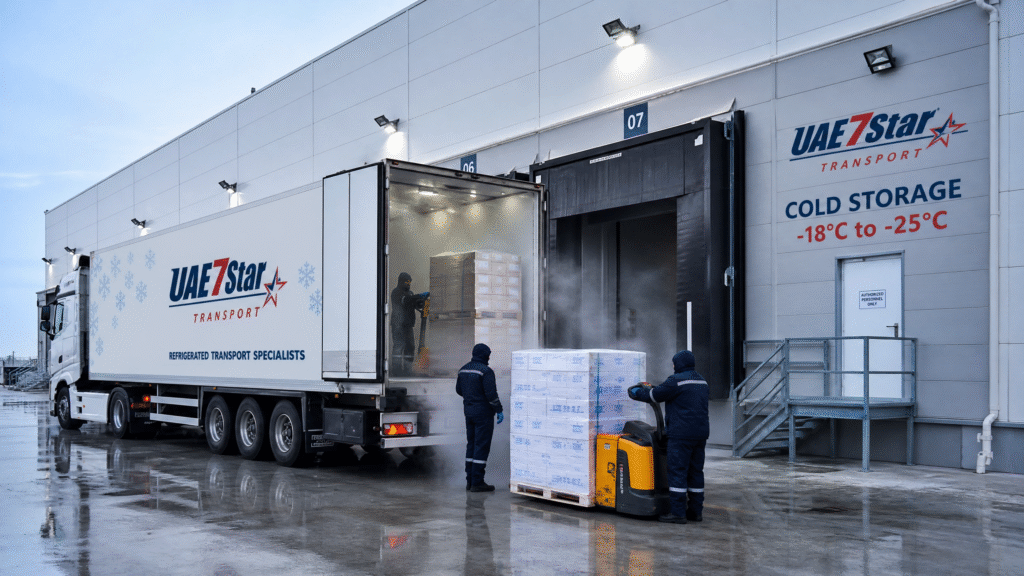
For deep-freeze requirements, maintaining a core temperature at or below -18°C is non-negotiable. True frozen goods transportation UAE specialists utilize high-capacity reefer units equipped with continuous airflow tracking. This prevents internal thermal pockets, which occur when cold air fails to reach the center or bottom of a stacked pallet.
Navigating Meat and Dairy Distribution
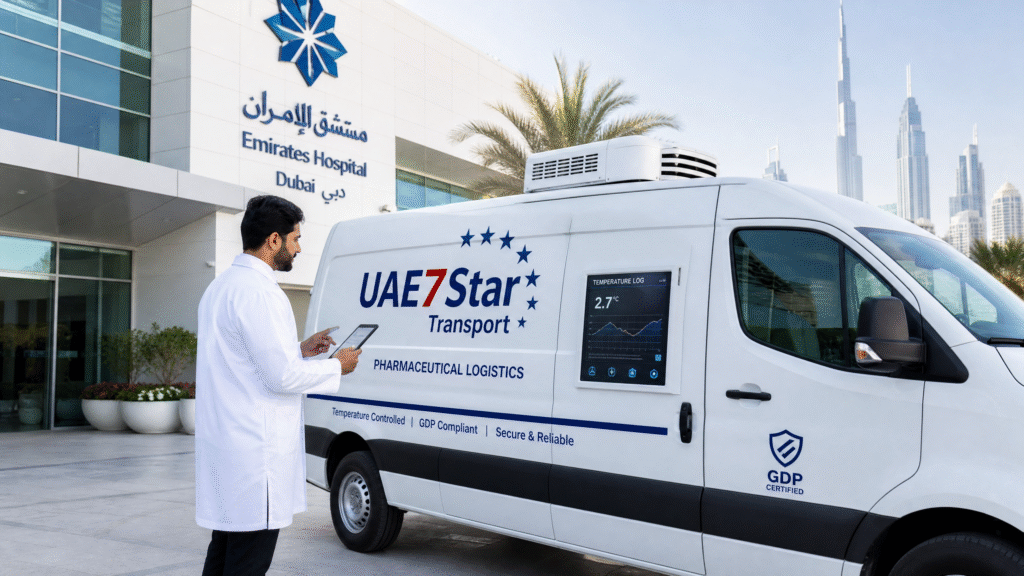
Moving fresh protein requires precision handling. Specialized meat transport UAE workflows demand precise sanitation protocols alongside strict temperature control to prevent Salmonella and Listeria outbreaks. Similarly, dairy product transport UAE networks rely on rapid transit and minimal exposure during loading dock transitions to preserve product stability and freshness.
The Role of the Food Delivery Chiller Truck UAE
For multi-drop delivery networks, retail redistribution, and last-mile logistics, deploying a dedicated food delivery chiller truck UAE is standard practice. These highly agile vehicles feature advanced multi-temperature compartmentalization and heavy-duty thermal curtains. These features shield internal cargo from sudden influxes of hot, humid air when the rear doors open during urban delivery stops.
3. Pharmaceutical Cold Chain: GDP Compliance and Life-Saving Cargo
While a temperature deviation in food logistics ruins flavor or shortens shelf life, a thermal excursion in pharmaceutical logistics can be catastrophic. When critical medicines overheat, their molecular structures can change, rendering them completely ineffective or, worse, toxic to patients.
Pharmaceutical Transport UAE & GDP Mandates
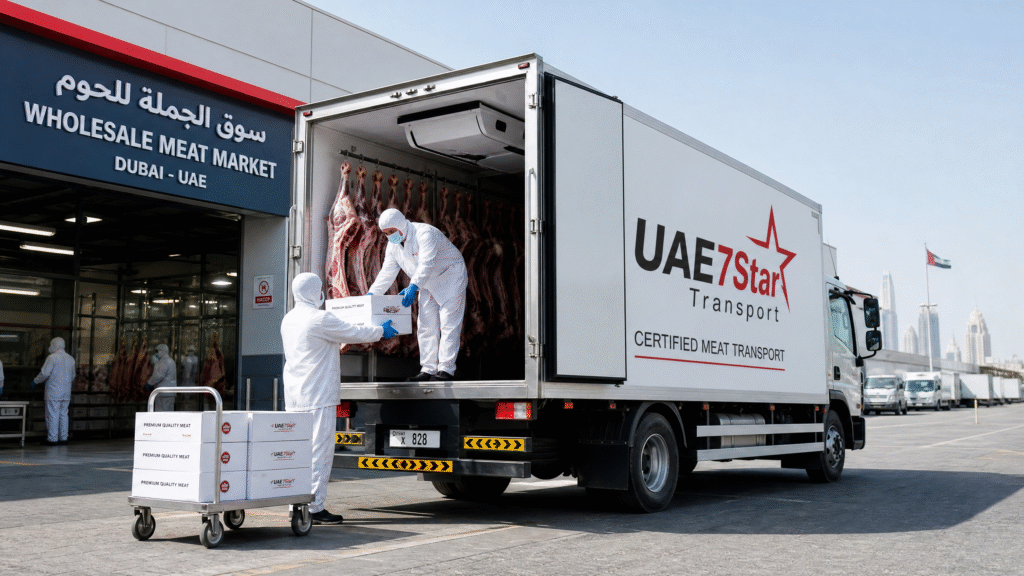
Operating a safe network for pharmaceutical transport UAE operations means adhering strictly to international Good Distribution Practice (GDP) guidelines. GDP rules require every vehicle used for medical cargo to have a fully validated cooling system capable of maintaining precise climate zones. This remains true even if the vehicle engine shuts off during loading or unloading.
Securing Medicine Cold Transport UAE
Standard commercial refrigeration systems are insufficient for medical applications. Transporting life-saving treatments requires specialized medicine cold transport UAE units equipped with dual-redundant power systems and medical-grade interior linings. These seamless, non-porous surfaces prevent contamination and stand up to rigorous medical sanitation routines.
The Logistics of Vaccine Transport UAE
Vaccines are among the most sensitive biological products on earth. Deploying a specialized vaccine transport UAE framework involves working within precise thermal bands:
- Routine Vaccines: 2°C to 8°C (Strictly monitored to prevent freezing or overheating).
- Ultra-Cold Biologics: -20°C down to -70°C (Requiring specialized ultra-low temperature freezers or dry-ice insulated transport systems).
To ensure complete accountability, fleet managers rely on temperature controlled medicine delivery UAE vehicles outfitted with certified, calibrated electronic data loggers. These devices record thermal readings at continuous intervals, providing unalterable cryptographic logs that prove the cargo remained within its safe parameters throughout the entire journey.
4. Key Criteria for Selecting a Cold Chain Partner in the UAE
When trust is the foundation of your supply chain, you cannot afford to partner with unverified transport providers. Your logistics partner should feel like an expert extension of your business. Look for the following technical capabilities when evaluating potential partners:
- Multi-Zone Temperature Control: Look for fleets featuring advanced split-compartment reefer trucks. These systems allow you to safely transport deep-frozen seafood at -18°C alongside chilled produce at 4°C within the exact same vehicle, maximizing payload efficiency.
- Real-Time Telematics & GPS Tracking: Modern cold chain networks utilize advanced IoT sensors that stream live temperature data and vehicle coordinates directly to a centralized dashboard. If a reefer engine encounters an issue, automated alerts instantly notify dispatchers to step in before cargo integrity is threatened.
- Regulatory & Compliance Paperwork: Ensure your chosen provider possesses active, fully auditable certifications from HACCP, GCCA, ADAFSA, and MOCCAE. A certified company protects your business from administrative delays, fines, and border impoundments.
- Rigorous Preventive Maintenance: Ask for clear documentation showing routine calibration of data loggers and strict thermal testing schedules for the vehicle fleet.
5. Frequently Asked Questions (FAQ)
What happens if food or medication undergoes a temperature excursion?
A temperature excursion occurs when a product falls outside its recommended storage range. For food, this accelerates spoilage and bacterial growth. For pharmaceuticals, it causes a loss of chemical potency or deactivates biological components, forcing the immediate disposal of high-value cargo.
Why is an ordinary delivery van unsafe for cold chain transport during the UAE summer?
During summer, the internal air temperature inside an uninsulated cargo van can easily surpass 60°C. Standard commercial vans lack the thick polyurethane insulation, specialized airflow layouts, and heavy-duty cooling units needed to overcome that level of intense radiant heat.
What is the difference between a chiller truck and a freezer truck?
Chiller trucks operate within a positive temperature range (typically 0°C to 12°C) to keep fresh produce, dairy, and chocolate cool without freezing them. Freezer trucks operate in sub-zero ranges (-18°C to -25°C) to keep frozen meats, seafood, and ice cream completely solid.
How do data loggers verify cold chain compliance?
Data loggers are calibrated electronic sensors placed inside the cargo area. They automatically record temperature and humidity levels at set intervals (e.g., every 5 minutes). This data creates an immutable digital ledger that clients can download to confirm compliance upon delivery.
6. Securing Your High-Value Cargo
Building a resilient, high-performing supply chain requires working with a logistics partner who understands the high stakes of temperature management. From international food brands to specialized pharmaceutical distributors, working with an experienced, certified partner shields your business from costly product losses and protects your brand’s reputation in the market.
If you are looking for secure, regulatory-compliant transport solutions anywhere in the country, explore our dedicated services at uae7startransport.com. Our modern fleet of HACCP, ADAFSA, and MOCCAE certified reefer trucks stands ready to support your business with precise temperature control and real-time delivery tracking across all Emirates. Contact our cold chain engineering team today to build a custom logistics solution tailored to your operational needs.